
Joint Replacement &
Implant Information
Click on the buttons for informative video about knee and hip replacements by WebMd
Joint Replacement/Implant Surgery
A joint replacement, or arthroplasty, is a surgical procedure that removes damaged or diseased parts of a joint (like hip, knee, shoulder) and replaces them with artificial components (prosthetics/implants) to relieve pain, improve movement, and restore function, typically caused by arthritis, injury, or tumors. The surgery involves implanting metal and plastic parts to mimic a healthy joint, allowing for smoother motion.
What it Involves:
- Removal: Damaged bone and cartilage are removed from the joint surfaces.
- Replacement: Artificial components (prosthesis/implants) made of metal, plastic, or ceramic are inserted to replace the removed parts.
- Common Joints: Most commonly hips and knees, but also shoulders, elbows, wrists, and ankles
Why it's Done:
- Osteoarthritis: Wear-and-tear on cartilage.
- Rheumatoid Arthritis: An autoimmune disease that causes joint inflammation.
- Trauma/Injury: Fractures or damage from sports injuries.
- Bone Tumors: Cancers affecting the bone.
Benefits:
- Significant pain relief.
- Improved range of motion and mobility.
- Restored ability to perform daily activities.
- A major benefit of joint replacement surgery is the resultant solid support and integration of your bone and implant — a process that requires the bone to heal tightly around the implant.
Recovery:
- Involves physical therapy to strengthen muscles.
- Timeline varies but can take weeks to months.
Joint Replacement Implants & Osseointegration
Osseointegration refers to the biological fixation of orthopedic implants directly to the bone, enabling bone ingrowth into porous, often titanium, components for long-term stability. This technique reduces pain and improves, or maintains, natural range of motion and strength by ensuring superior, long-term prosthetic anchoring.
Key Aspects of Knee Implant Osseointegration
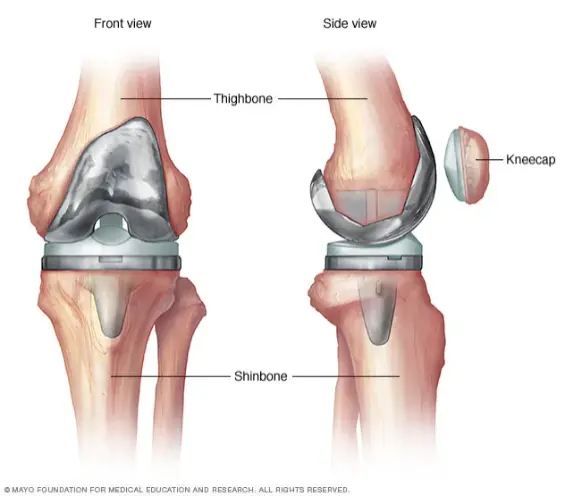
- Mechanism: Implants are designed with specialized porous surfaces that encourage natural bone to grow into the metal, creating a direct, durable, and, in some cases, stronger bond over time, allowing for enhanced load-bearing.
- Application: The concept is fundamental to modern, “cementless” total or partial knee arthroplasty, where no bone cement is used to fix the implant.
- Benefits: This technique minimizes, or eliminates, common issues associated with cemented implants, such as loosening, while improving stability and restoring a more natural, or near-normal, gait.
- Rehabilitation & Care: The process generally requires a recovery period for the bone to grow into the implant, often requiring careful, guided, and, in some cases, reduced weight-bearing to ensure successful, long-term, and stable integration. Considering nutritional support with BONE-TITE MD may also be helpful during rehabilitation.
- Risks: While generally very successful, potential, albeit rare, complications may include implant loosening or, in some cases, infection.
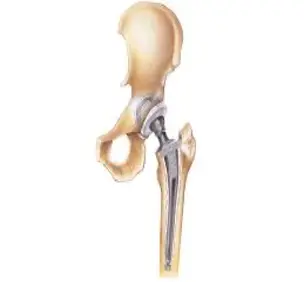
This method, often used in knee, hip, and some limb-replacement cases, represents a shift towards allowing the body’s natural regenerative processes to strengthen and secure the joint replacement.
Success or failure of joint replacement implants depends on the health nutritional profile of the person receiving the treatment, drugs which affect the chances of osseointegration, and the health of the soft tissues involved.
Knee Replacement & Osseointegration
Hip Replacement & Osseointegration
Note: All information on this website is intended for your general knowledge only and is not a substitute for medical advice or treatment for a specific medical condition. Please consult your physician if you have questions or concerns regarding your health.
* These statements have not been evaluated by the Food and Drug administration. This product is not intended to diagnose, treat, cure or prevent any disease.